Cosmetic Acupuncture: A Gentle Alternative to Injectables and Skin Tightening
- Stella de Stefanis

- Feb 19
- 6 min read
Updated: Apr 3
If you’ve been exploring ways to support your skin as it changes - whether that includes fine lines, loss of firmness, dullness, or breakouts - you’ve likely encountered injectables, lasers, radio frequency, or surgical skin tightening.

Cosmetic acupuncture offers a different approach to aesthetic care.
Not as a replacement for injectables. Not in opposition to modern dermatology. But as a physiologically supportive option grounded in both Traditional Chinese Medicine (TCM) and contemporary research on circulation, neuromodulation, and tissue biology.
At Acupunctury in Santa Monica, I use cosmetic acupuncture as part of a whole-body treatment strategy designed to support microcirculation, autonomic nervous system balance, and overall tissue function. For some clients, it serves as a natural-leaning alternative. For others, it complements existing aesthetic treatments.
Below is a clear explanation of what cosmetic acupuncture is, how it works based on current evidence, and why I integrate body acupuncture, LED light therapy, facial cupping, and gua sha for comprehensive care.
What Is Cosmetic Acupuncture?
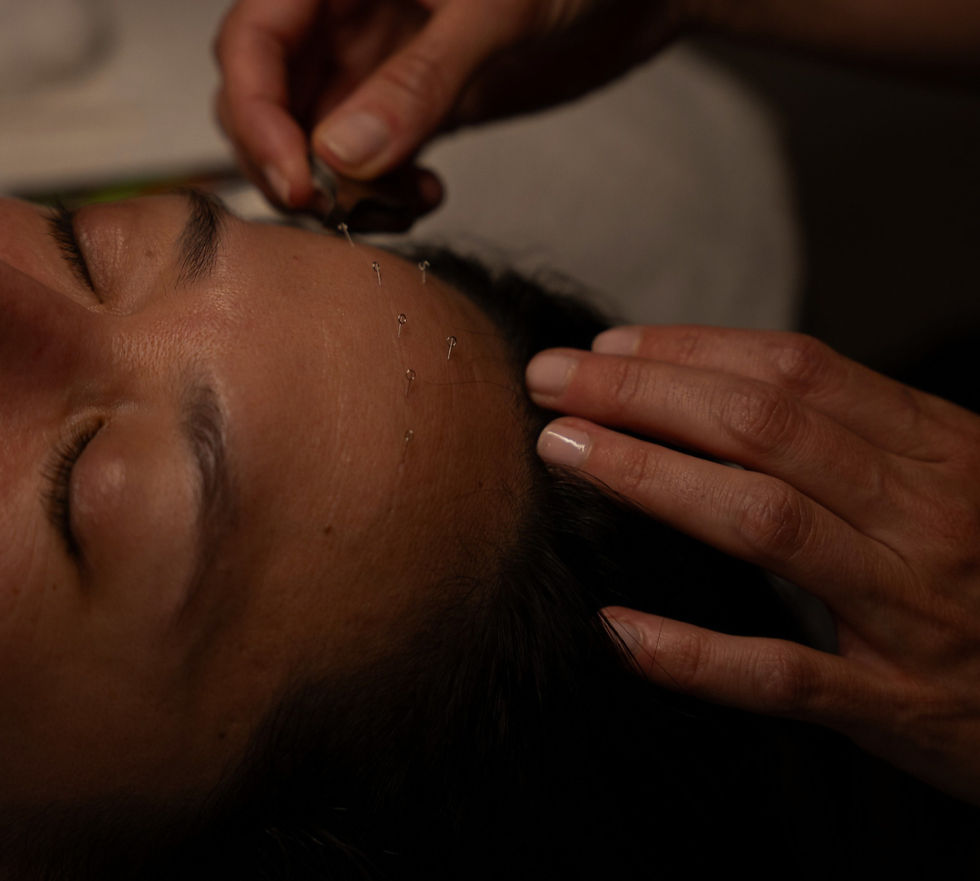
Cosmetic acupuncture (also called facial acupuncture or facial rejuvenation) involves placing very fine, sterile needles in specific areas of the face and body.
Treatment typically includes:
Local facial points
Body acupuncture points selected to support systemic balance
In Traditional Chinese Medicine, the face reflects internal patterns - including stress load, sleep quality, digestion, and hormonal shifts. Modern physiology similarly recognizes that circulation, inflammatory signaling, and autonomic nervous system activity influence skin function.
Cosmetic acupuncture should be understood as a gradual, cumulative intervention - not an immediate structural procedure.
How Cosmetic Acupuncture Works (The Physiology)
Several mechanisms help explain how acupuncture may influence skin health.
1. Increased Local Microcirculation
Studies using laser Doppler and perfusion imaging demonstrate that acupuncture increases microcirculation at and around needle insertion sites (Kim et al., 2011; Hsiu et al., 2007).
Improved microcirculation enhances oxygen delivery and metabolic exchange within tissues - both important for maintaining healthy skin function.
While increased blood flow alone does not equate to structural remodeling, it supports the biologic environment in which tissue maintenance occurs.
2. Controlled Micro-Stimulation
The insertion of fine needles creates localized, controlled mechanical stimulation.
In cosmetic acupuncture research - though limited in scale - small clinical studies suggest potential improvements in facial elasticity and wrinkle depth when treatments are performed as a series (Yun et al., 2013; Donoyama et al., 2012).
It is important to note:
These studies are small
More high-quality randomized trials are needed
Effects are modest and cumulative
For this reason, cosmetic acupuncture is best described as supporting tissue signaling and functional balance rather than producing dramatic and instant structural change.
3. Nervous System Regulation
Acupuncture has strong evidence in the area of autonomic regulation.
Research suggests acupuncture can influence:
Parasympathetic nervous system activity
Heart rate variability
Pain and inflammatory signaling pathways(Li et al., 2013; Choi et al., 2022)
Because chronic stress affects inflammatory pathways, sleep, and muscular tension patterns, supporting autonomic balance may indirectly benefit skin clarity and facial tension over time.
Cosmetic Acupuncture vs. Injectables
Many informed, thoughtful individuals choose injectables. There is no hierarchy in aesthetic decisions.
Injectables such as neuromodulators and fillers:
Alter muscle activity
Add volume
Create targeted structural changes
Produce relatively immediate visible results
Cosmetic acupuncture works differently:
It does not immobilize muscles
It does not add synthetic volume
It works gradually
It aims to support physiologic tissue balance
Some clients use cosmetic acupuncture between injectable appointments. Others prefer it as a standalone option. For safety and tissue stability, I typically recommend allowing at least four weeks between injectable treatments and cosmetic acupuncture. In some cases for your safety, we ask that you obtain clearance from your injectable provider before receiving cosmetic acupuncture.
Why I Incorporate LED Light Therapy
I integrate medical-grade Celluma LED light therapy because photobiomodulation has strong clinical evidence for certain skin-specific outcomes.
Red & Near-Infrared Light
Peer-reviewed research shows red and near-infrared wavelengths:
Support mitochondrial activity and ATP production
Influence fibroblast behavior
Improve the appearance of mild to moderate photoaging
Reduce inflammatory markers (Avci et al., 2013; Barolet et al., 2009)
LED therapy is non-thermal and does not damage tissue.
Blue Light
Blue light (around 405–415nm) targets Cutibacterium acnes (formerly Propionibacterium acnes), the bacteria associated with acne.
Clinical studies show blue light can:
Reduce acne-associated bacterial activity
Improve mild to moderate inflammatory acne over a treatment series (Gold et al., 2011; Papageorgiou et al., 2000)
For clients navigating both breakouts and signs of aging, light modes can be alternated or combined based on skin presentation. When paired with acupuncture - which supports circulation and autonomic balance - LED may complement treatment by addressing both tissue oxygenation and cellular energy pathways.
The Role of Facial Cupping & Gua Sha
Facial cupping and gua sha are therapeutic techniques rooted in Traditional Chinese Medicine (TCM), a medical system developed over thousands of years. In TCM theory, they are used to “move qi and blood” - a traditional framework describing the promotion of circulation and the resolution of stagnation within tissues. While these methods have recently gained popularity in modern skincare, they originate within a broader medical context focused on restoring balance and supporting systemic health. In contemporary physiologic terms, these techniques influence superficial circulation and soft tissue mobility.
Laser Doppler imaging studies demonstrate that gua sha significantly increases local microcirculation in treated areas (Nielsen et al., 2007). Research on cupping therapy similarly shows measurable increases in skin blood flow and microvascular responses (Loh et al., 2012).
Most of this research examines body treatments rather than cosmetic outcomes specifically. However, the underlying physiologic mechanisms - increased superficial circulation and reduced muscular tension - are relevant to facial tissues as well.
Clinically, these techniques may support:
Reduced puffiness
Softer jaw and brow tension
Improved fascial glide
Chronic contraction of the masseter, frontalis, and corrugator muscles contributes to tension lines and asymmetry over time. Addressing these patterns may support more balanced facial movement.
When appropriate, I teach simplified at-home techniques for maintenance. Gentle technique and consistency are essential.
Why Consistency Matters
Cosmetic acupuncture works through biologic processes - circulation, neuromodulation, and tissue signaling - rather than mechanical restructuring.
Because tissue adaptation and collagen turnover occur gradually, repetition matters.
Small cosmetic acupuncture studies suggest improvements are more likely when treatments are performed as a series (Yun et al., 2013).
Although care is personalized, a typical protocol includes:
8–10 weekly treatments initially
Maintenance sessions every 4–6 weeks
One treatment may temporarily increase circulation. A series supports cumulative tissue adaptation. Setting realistic expectations is essential: cosmetic acupuncture supports physiologic processes. It is not designed to create immediate structural change.
Who Is Cosmetic Acupuncture For?
Cosmetic acupuncture may be a good fit if you:
Prefer gradual, natural-looking changes
Value whole-body approaches to skin health
Experience stress-related skin fluctuations
Are navigating hormonal transitions such as perimenopause
Want a complementary option alongside aesthetic treatments
Appreciate treatments that include nervous system regulation and rest
A thorough consultation allows us to review your goals, medical history, and expectations to determine whether this approach aligns with your needs.
A Thoughtful Approach to Skin Health
Research in cosmetic acupuncture and integrative aesthetic therapies continues to evolve. While larger, high-quality trials are still needed in this field, several physiologic effects relevant to skin health are well established.
What we know from current evidence:
Acupuncture increases local microcirculation, supporting oxygen delivery and metabolic exchange in treated tissues.
Acupuncture influences autonomic nervous system activity, including parasympathetic regulation and stress-related signaling pathways.
Acupuncture modulates inflammatory and pain pathways, which are relevant in conditions such as acne, tension-related headaches, and jaw clenching.
Red and near-infrared LED light therapy (photobiomodulation) has clinical evidence supporting improvements in mild to moderate photoaging, likely through mitochondrial (ATP-related) pathways and effects on fibroblast activity.
Blue light therapy has demonstrated antimicrobial effects against Cutibacterium acnes and has been studied in the treatment of mild to moderate inflammatory acne.
Manual TCM techniques such as gua sha and cupping measurably increase superficial microcirculation and may reduce muscular tension patterns.
Skin health is influenced by circulation, inflammation, muscular tension, hormonal shifts, and stress physiology. These systems are interconnected.
Cosmetic acupuncture does not override biology - it works with it. The goal is not forced change, but functional support: improving the environment in which skin maintains and repairs itself.
When approached consistently and thoughtfully, this integrative model offers a grounded, physiologically informed way to support both skin appearance and overall balance.
If you’re curious whether this approach aligns with your goals, I’m always happy to have a conversation.
📞 Call/Text: (424) 252-1210
📧 Email: hello@acupuncturyla.com
🌐 Website: www.acupuncturyla.com
📱 Instagram: @acupunctury
📍 Address: 1150 Yale St, Suite 10, Santa Monica, CA 90403
Medical Disclaimer: The information provided here is for educational purposes only and is not intended as medical advice. Each individual is unique, and acupuncture treatments are always tailored to the person’s specific needs. If you are experiencing a health concern, please consult a licensed healthcare professional to determine the most appropriate course of care.


Comments